保健所のしごとメモ

保健所のしごとに関するメモやリンク集です

保健所医師とは

全国保健所長会 

www.phcd.jp

保健所医師(公衆衛生医師)の情報が載っています。

保健所の業務紹介 パンフレット 2020年版

ブログアイキャッチの結核対策も載っています。

https://www.phcd.jp/02/j_ishiboshu/pdf/panf_2020.pdf


期待の若手シリーズ

公衆衛生医師となった方のエッセイ。月刊「公衆衛生情報」掲載。

https://www.phcd.jp/02/j_koushueisei/index.html#watashi


その他

日々の業務についてのブログ


全国の保健所の様子がわかります。
保健所長のお仕事紹介〜現役公衆衛生医師のホンネに迫る〜


公衆衛生医師の紹介動画

www.youtube.com


感染症 IMD IASR_2026.10

id-info.jihs.go.jp


IASR 2026年9月号 IMD特集

学生寮の事例

学生寮で発生した侵襲性髄膜炎菌感染症(IMD)事例と保菌検査結果について|国立健康危機管理研究機構 感染症情報提供サイト


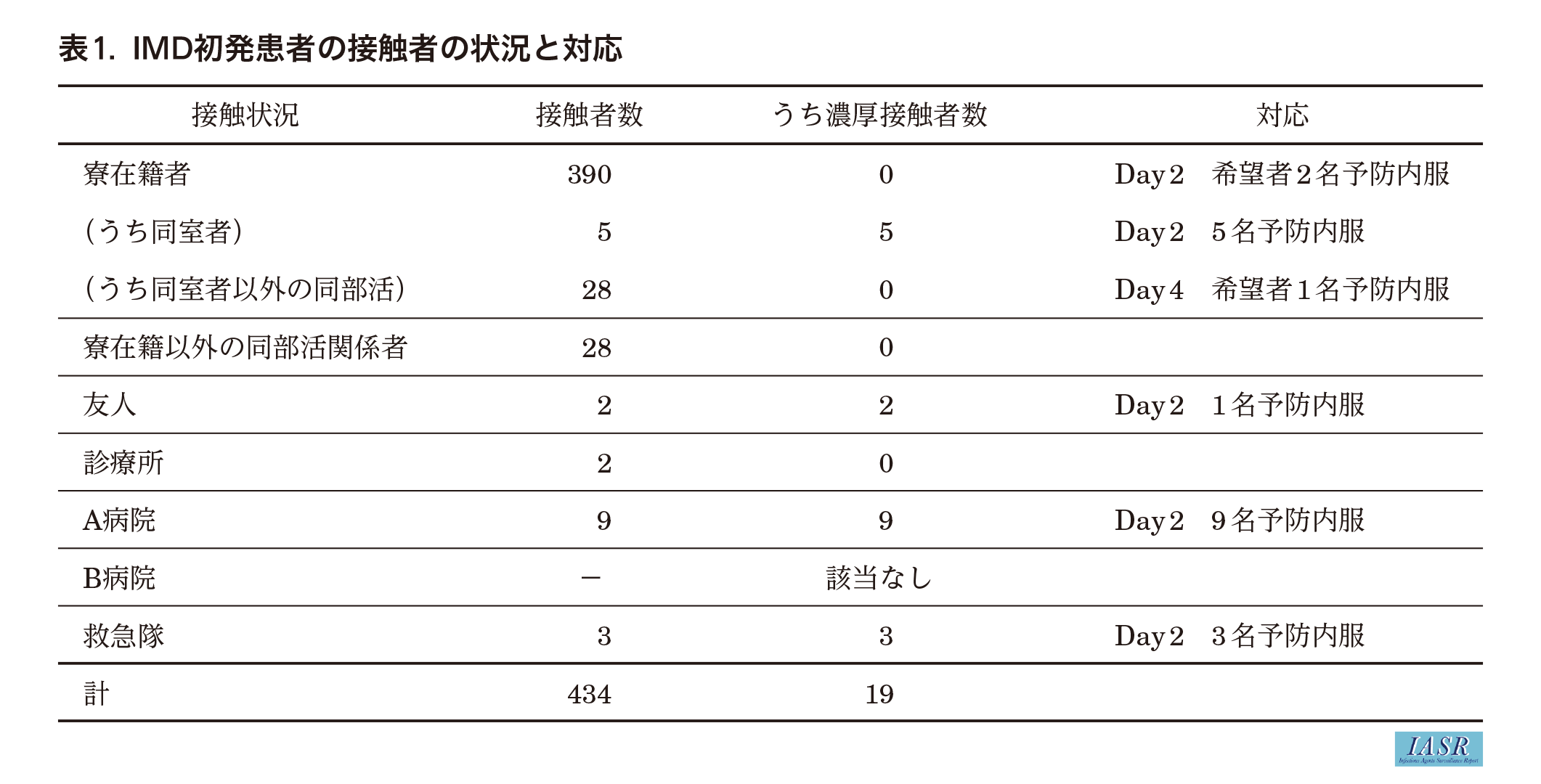
Day2:保健所が積極的疫学調査を実施し, 寮の7名が抗菌薬予防内服した(表1)。

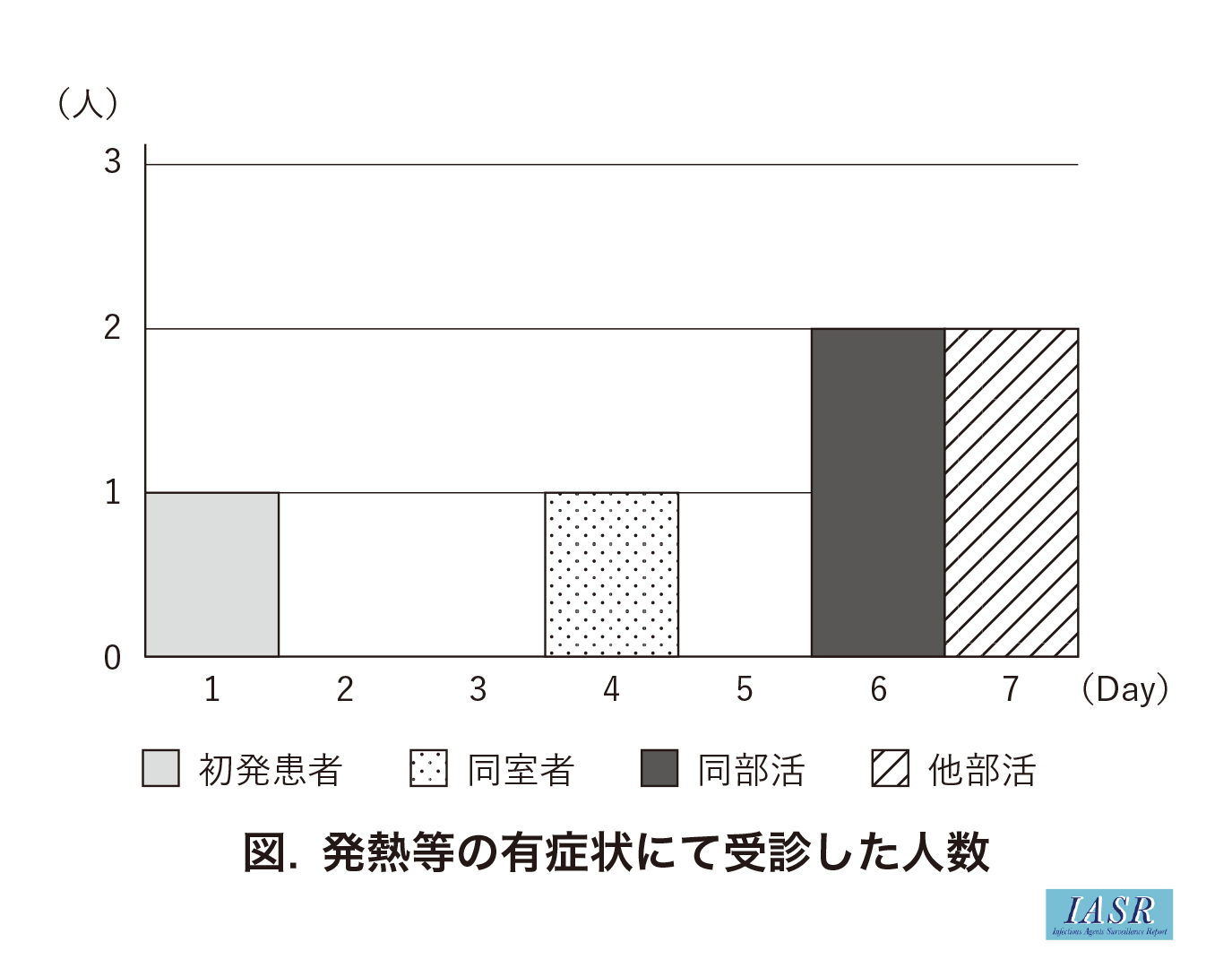
Day4~7:有症状者5名が受診したが, IMDの診断はなかった(図)。

Day22:健康観察終了とした。

3カ月後:寮に在籍する学生・保護者に保健所と大学が連名で今回の対応経緯とIMDに関する注意喚起文書と東京都のリーフレット1)を通知した。

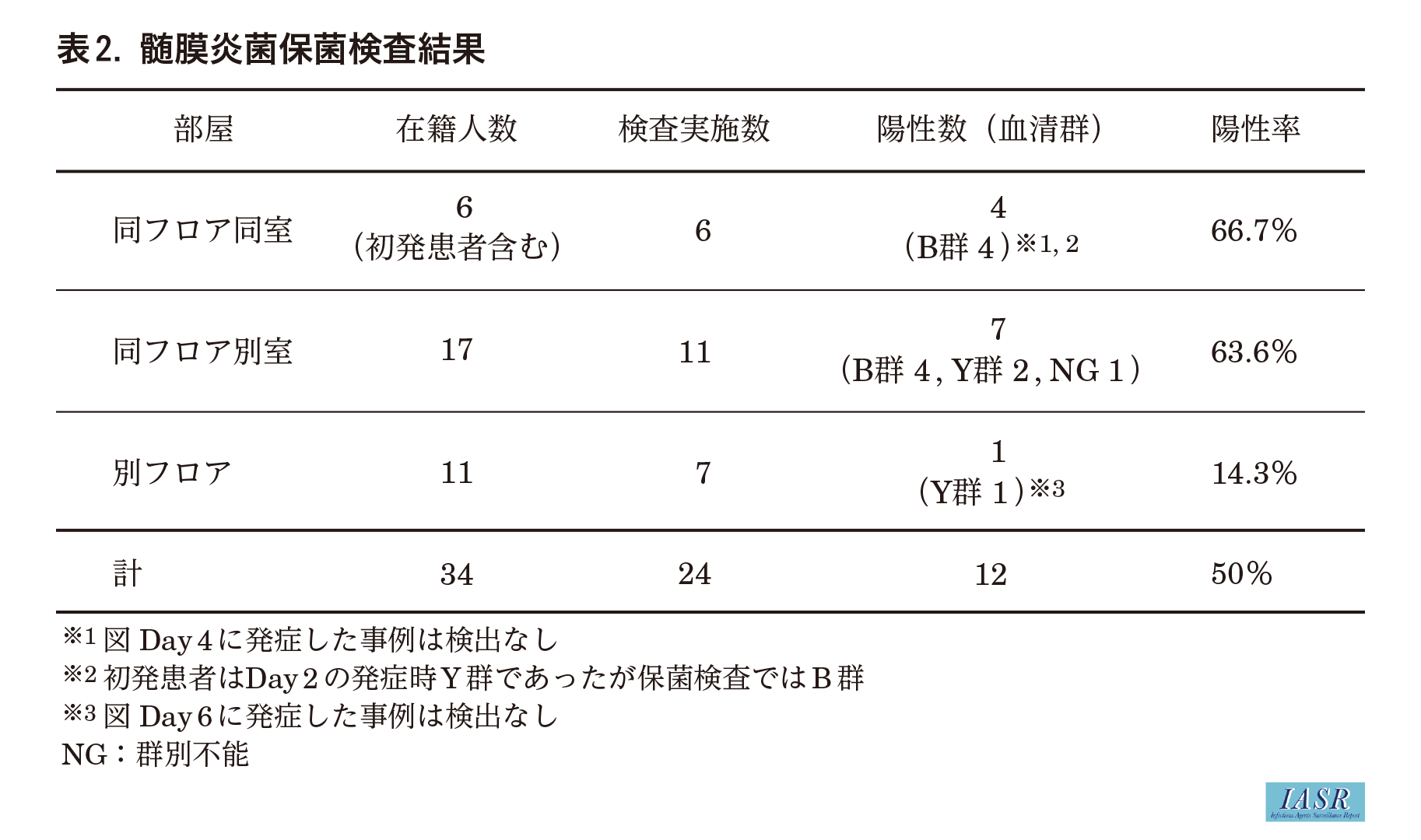
7カ月後:大学および東京都・国立感染症研究所と検討し, 同部活の学生のうち希望者に保菌検査を実施した(表2)。

11カ月後:同部活の学生・保護者に対し経緯の説明文書を発出し, 対応終了とした。


Ref. NHS vs Palantir Lancet_2026.10

www.thelancet.com


World Report Volume 408, Issue 10562 p1290 October 03, 2026

NHS campaigners target Palantir
Talha Burki


2026年10月1日、英国の活動家たちは、NHS(英国国民保健サービス)と米国のソフトウェア企業パランティア・テクノロジーズとの契約に対する懸念から、「パランティアとの関係を終わらせるべきだ」と訴える行動日を実施した。アムネスティ・インターナショナルUKのキャンペイナーであるトム・グハは、パランティアがイスラエル軍や米国移民税関捜査局(ICE)と協力している点を指摘し、「NHSの価値観とは相容れない」と述べた。


英国では、パランティアは数億ポンド規模の公共契約を獲得してきた。2023年には、NHSの「Federated Data Platform(FDP)」を支援するための3億3000万ポンドの契約を受注。FDPは医療機関間の患者データを統合し、分析や診療プロセスの効率化を図るものだ。


Ref. beyond rescue Nepal's 2026 flood Lancet_2026.09

www.thelancet.com

Comment Volume 408, Issue 10561 p1148-1150 September 26, 2026


Beyond rescue: building a resilient health system after Nepal's 2026 flood


Abhilasha Karkeya Send email to akarkey@oucru.org ∙ Sudeep Adhikaria ∙ Buddha Basnyata

Nepal clearly needs robust disaster preparedness involving multiple sectors

such as hydrometeorology, health, finance, infrastructure, security, food, energy, telecommunications, and many more.

The health system should be capable of operating along two simultaneous tracks. The first must provide search and rescue, emergency and trauma care, medical evacuation, and timely referral.

The second must protect population health by

maintaining disease surveillance and laboratory diagnosis,

preventing and managing outbreaks,

ensuring safe water and sanitation,

preserving maternal and child health and mental-health services,

maintaining vaccination and disease-control programmes, and

ensuring continued access to treatment for chronic diseases.

Neglecting either track will cost lives.


Rural health systems cannot depend excessively on Kathmandu or other major cities for emergency care, essential diagnostics, medicines, vaccines, and specialist advice.

High-risk districts need pre-identified alternative referral routes and facilities, strategically located emergency stocks, reliable communication systems, and laboratory networks able to continue operating when roads, bridges, or electricity supplies fail.

Health facilities should have regularly tested business-continuity plans, and health workers should receive practical training and participate in multisectoral disaster simulations.

Early-warning messages must also be locally understandable and linked to clear instructions about where people should go and what they should do.

 

Ref. the tragic fallacy of global health reform Lancet_2026.09

www.thelancet.com


Offline: The tragic fallacy of global health reform
Richard Horton Send email to richard.horton@lancet.com

In Jorge Luis Borges's fantastical short story, Tlön, Uqbar, Orbis Tertius, written in 1940, he imagines the invention of a new world, Tlön, by a secret society of, among others, astronomers, biologists, and engineers. 


Two important reform initiatives emerged. First, the Accra Reset, launched by Ghana's President John Mahama during the 2025 UN General Assembly, intends to end the political marginalisation aid recipients endured, where rules and instruments that shaped global health excluded the nations those same rules and instruments claimed to be serving.

1つめとしてアクラリセット(援助を受ける側の国が議論の辺縁にいる状態をやめること)


Second, WHO is hosting its own reform process—“a time-bound multilateral effort to support transformation of global health architecture”. A report on what this reform might look like is being prepared for the 2027 World Health Assembly by WHO's Director-General. 

2つめとして多国間による共同サポート


What is sometimes forgotten is that global health is about power—and the rich world, despite its kindly reassurances, will not loosen the ties that keep countries constrained and dependent. And remember: reform has been a subject for rumination ever since global health entered our lexicon.

Councils, panels, and task forces will thrive and reproduce. And this vast displacement activity will likely contribute not one trace of benefit to the health of peoples.

このままでは誰の得にもならないのではないか。

Ref. Dr.Ukai Asymptomatic TB in Japan Lancet.RHWP_2026.05

https://www.sciencedirect.com/science/article/pii/S2666606526000842


www.thelancet.com

Articles Volume 70101880 May 2026
Open access

Download Full Issue
Asymptomatic tuberculosis in Japan: a 15-year national surveillance study, 2008–2022
Tomohiko Ukaia Send email to ukai_tomohiko@jata.or.jp ∙ Kaung Si Thua ∙ Kazuhiro Uchimuraa ∙ Akihiro Ohkadoa ∙ Takashi Yoshiyamaa,b ∙ Edine Tiemersmac


Background

Asymptomatic tuberculosis (TB), defined as active TB without reported symptoms, remains poorly characterised. We assessed long-term trends, factors associated with asymptomatic diagnosis, and treatment outcomes of asymptomatic TB in Japan using nationwide surveillance data with widespread chest radiographic screening.
 

Findings

Among 141,481 pulmonary TB cases, 20.2% were asymptomatic, 61.3% had respiratory symptoms, and 18.5% had non-respiratory symptoms. Over time, the proportion of asymptomatic TB increased slightly, remaining around one-fifth of all pulmonary TB cases and 12–15% of cases with smear-positive or cavitary disease. Among asymptomatic patients, 34.1% were smear positive and 20.3% had cavitary disease. In multivariable analysis, asymptomatic TB was more common in younger groups, those in employment or education, and those with previous TB treatment. Mortality during treatment was lower in asymptomatic TB (adjusted risk ratio 0.57, 95% CI 0.54–0.60) than in respiratory symptomatic TB.

Ref. Expanding Xpert test TB+HIV Lancet.ID_2026.09

www.thelancet.com

Articles Volume 26, Issue 9 p881-893 September 2026
Open access

Download Full Issue
Expanding Xpert MTB/RIF Ultra and lateral flow urine lipoarabinomannan testing for diagnosis of tuberculosis among adults living with HIV admitted to hospitals in Tanzania and Mozambique (EXULTANT): a randomised controlled trial

タンザニアとモザンビークの11の病院で実施されました。入院後24時間以内に、結核の既往歴や最近の結核治療歴のないHIV感染成人(18歳以上)を連続的に登録しました。介入群は、症状の有無にかかわらず、喀痰、便、尿からのXpert MTB/RIF Ultra(Xpert Ultra)検査と、ラテラルフロー尿リポアラビノマンナン(LF-LAM)検査(Determine TB LAM Agアッセイ)を受けました。対照群は、WHOが推奨する症状に基づく標準的な喀痰Xpert UltraおよびLF-LAM検査を受けました。主要評価項目は、微生物学的に結核と確定診断された参加者のうち、72時間以内に治療を開始した者の割合でした。


調査結果

2022年9月25日から2024年3月15日まで、1534人の参加者をスクリーニングし、1172人(76.6%)を介入群(n=582)または対照群(n=590)にランダムに割り当てました。入院時、参加者のうち715人(61.0%)が女性で、845人(75.4%)が抗レトロウイルス療法(ART)を受けており、CD4細胞数の中央値は1μLあたり232細胞(IQR 87~490)でした。対照群では、505人(85.6%)が結核に合致する症状があり、喀痰Xpert Ultra検査の対象となり(そのうち306人[60.6%]が検体を提供)、538人(91.2%)がWHOのLF-LAM検査基準を満たしていました。治療意図分析では、介入群の参加者582人のうち93人(16.0%)、対照群の参加者590人のうち90人(15.3%)が微生物学的に結核と診断され、72時間以内に治療を開始した(差0.7%、95%信頼区間-3.4~4.8、p=0.73)。8週間の全死因死亡率は、介入群で25.8%(582人中150人)、対照群で28.8%(590人中170人)であった(ハザード比0.86、95%信頼区間0.69~1.07、p=0.18)。結核治療開始までの期間の中央値は、介入群で0.98日(四分位範囲0.83~1.92)、対照群で0.92日(0.79~1.86)であった(ハザード比1.05、95%信頼区間0.82~1.33、p=0.72)。

解釈

入院したHIV感染者を対象としたスクリーニング戦略の拡大は、微生物学的に結核と確定診断された患者のうち治療を開始する人の割合を増加させず、8週間後の死亡率を低下させることもなかった。